

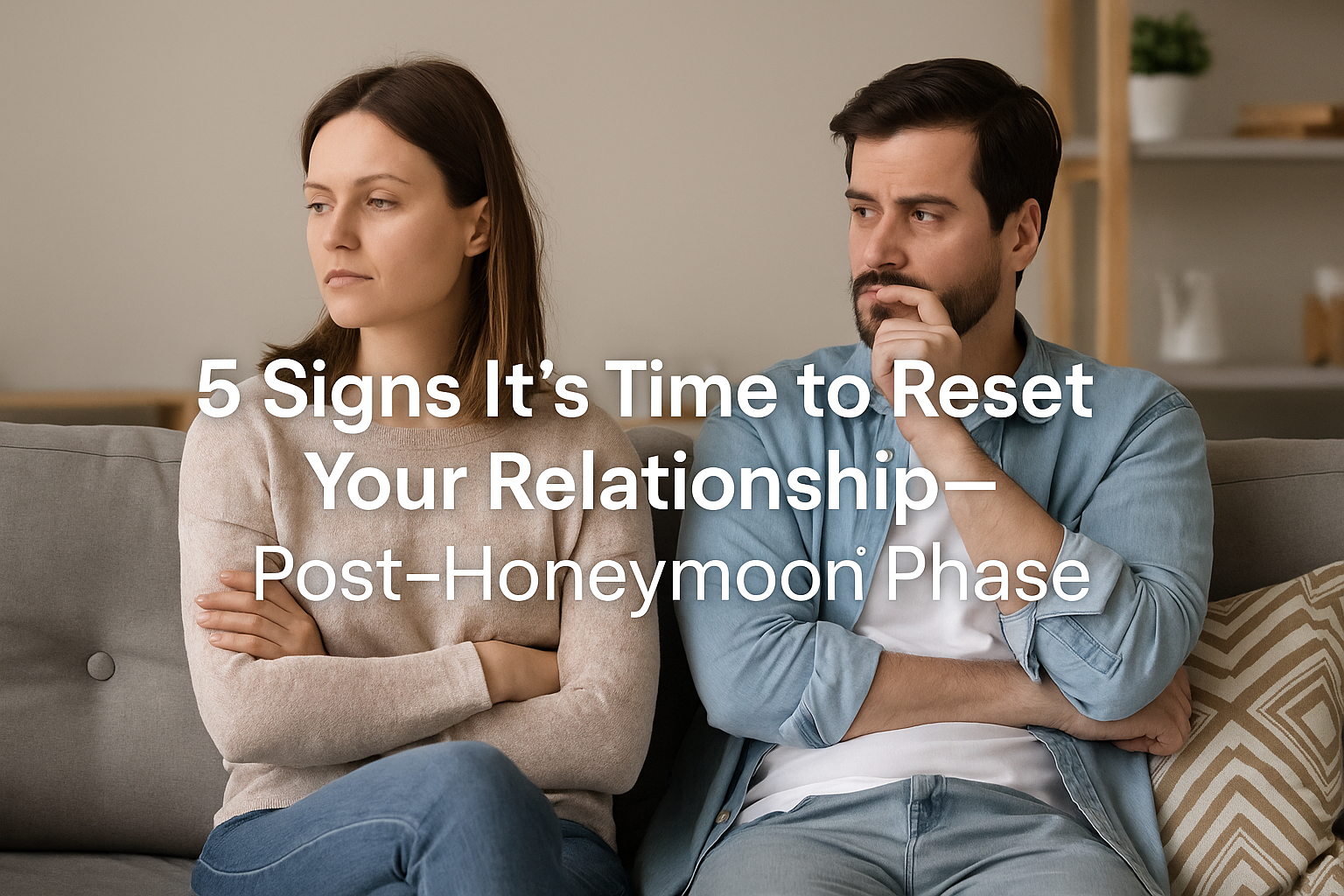
27 Aug 5 Signs It’s Time to Reset Your Relationship—Post-Honeymoon Phase
Feeling disconnected post-honeymoon is common—but it doesn’t mean your relationship is failing. This blog walks through 5 key signs it may be time for a relationship reset, along with practical tools, therapist insights, and hopeful guidance for reconnecting with your partner.
The early days of a relationship often feel magical. But what happens after the spark dims and everyday life settles in? If you’re feeling a little lost or disconnected from your partner, you’re not alone. These emotional shifts are a natural part of long-term love—but sometimes, they signal that it’s time for a relationship- reset.
Understanding the Transition
Many couples exit the honeymoon slope between six months and two years in—entering playfully-named phases like “power struggle” or “disillusion.” That shift is natural. A relationship reset recognizes this shift—not as a problem, but as an invitation to consciously build the next stage.
Here are five common signs it might be time to pause, reflect, and intentionally reconnect.
What are the signs that your relationship needs a reset?
If your relationship feels emotionally distant, stuck in repetitive conflict, or lacking intimacy, it may be time for a reset.
Read on to explore five detailed signs that suggest your connection could benefit from a thoughtful pause and realignment.
1. You’re Having the Same Arguments—On Repeat
Maybe it starts with dishes. Or texts left unanswered. But before you know it, you’re caught in a loop of familiar fights that never seem to resolve.
Repetitive conflict isn’t just frustrating—it’s exhausting. When partners circle the same disagreements without progress, it’s often a sign that deeper needs aren’t being heard or addressed. A relationship reset can help both of you pause the cycle, learn new ways to communicate, and finally feel understood.
As a therapist, I’ve seen how small patterns can snowball if left unchecked. Often, the goal isn’t to win the argument—it’s to be heard or seen.
2. You’ve Drifted Emotionally & Spend Less Quality Time
You’re under the same roof, but it feels like you’re living parallel lives. There are fewer shared laughs, lingering touches, or spontaneous moments.
It doesn’t always happen overnight. Often, busy schedules, stress, and habit can slowly replace closeness. Rebuilding small rituals of connection—like talking over coffee or evening check-ins—can breathe warmth back into your bond.
In my work, I often encourage couples to carve out intentional moments, even five minutes, to simply be together.
Here’s something I often hear: “We fell into autopilot until one night we started texting cute morning messages again—just to say hi. It took two minutes, but it changed our mood.”
3. Intimacy Feels Different—Or Has Disappeared
Whether it’s less sex, less affection, or less emotional openness, changes in intimacy often reflect unspoken tension or growing distance.
It’s normal for passion to evolve over time, but intimacy should still feel like a shared safe space. If physical or emotional closeness starts feeling like a chore, a reset can help reignite comfort and curiosity.
There’s no “normal” pace for closeness. What matters is how safe and seen you feel in those intimate spaces.
4. You Feel Burned Out, Anxious, or Unheard
Relationships shouldn’t feel like a second job. If you’re feeling drained, stressed, or constantly walking on eggshells, something may be out of alignment.
Emotional burnout can stem from poor communication, unmet needs, or unspoken resentment. If past experiences or trauma are contributing to these patterns, individual therapy may offer deeper support. A reset invites both partners to explore what feels heavy—and how to lift it together.
I believe healing begins the moment we name what’s hard—without shame or blame.
5. You Notice Subtle Disrespect or Coldness
Maybe it’s sarcasm. Or eye-rolls. Or just a growing sense that you’re not on the same team anymore.
Small signs of disconnection matter. When warmth and respect fade, it’s easy to slide into patterns of criticism or emotional distance. Acknowledging this shift early can help you reset before real damage is done.
Respect is the quiet glue in long-term connection. You deserve to feel cherished, not tolerated.
Why a Reset Is Healthier Than Letting Issues Fester
A relationship reset isn’t about blaming or starting over. It’s about consciously choosing to grow in a new direction—together.
Think of it as hitting pause to realign your values, needs, and rhythms. Explore this comprehensive guide to online couples therapy in NYC if you’re looking for a more structured reset path. You don’t have to wait until things fall apart to take that step.
Resetting is a sign of strength, not weakness. It’s how we show up for love with intention.
4 Reset Tools That Can Help You Reconnect
- Weekly check-ins: A simple 20-minute talk about how you’re feeling and what you need.
- Intentional date nights: Go beyond routine. Try something new together.
- Conflict debriefs: Instead of replaying a fight, unpack what triggered it and how to support each other next time.
- Professional support: A therapist can help you make sense of patterns and build tools that actually work.
Bonus Tip: Self-Expansion + Novelty
Keep growing as individuals (a class, a hobby, a meetup), then share your new experiences over a coffee. This nurtures self-expansion and keeps things fresh (News.com.au).
When to Consider Professional Support
Have a story or insight that helped you reset your relationship? We welcome heartfelt experiences that can support others—feel free to share them through our contact form or in trusted communities.
Sometimes, reconnecting requires a neutral, trained guide—like a couples therapist who understands your dynamic. If you feel stuck, unheard, or unsure how to move forward, couples therapy can offer real clarity.
At my practice Therapy, I specialize in helping couples rediscover emotional safety, rebuild trust, and find real momentum again. Based in Astoria and offering virtual sessions, I meet you where you are—with empathy, care, and a clear path forward.
Explore Gabriela’s approach | Ready to reset your relationship?
FAQs
What’s a relationship reset?
It’s a conscious choice to reconnect, often involving new habits, communication tools, and shared reflection—sometimes with a therapist’s help.
Is it normal to feel distant after the honeymoon phase?
Yes. Emotional ebb is natural. Partners often shift out of honeymoon mode between 6 and 24 months—even in healthy relationships. But ongoing distance may signal deeper needs that deserve care (Verywell Mind).
Do both partners need to want the reset?
Ideally, yes. But even one partner starting the conversation can shift the dynamic.
Can therapy really help if we’ve tried it before?
Yes—especially with a therapist who offers personalized support and active guidance.
About the Author
Gabriela GiuggIoloni, LCSW-R
Gabriela is a licensed mental health counselor based in Astoria, NYC. She works with individuals and couples to restore emotional connection, build communication skills, and navigate life transitions with confidence.
Sorry, the comment form is closed at this time.